Sweeping new rules designed to deal with the “total Wild West” young people were experiencing online have now been in place across the UK for a month.
Ofcom’s Children’s Codes require pornography and other harmful content to be kept away from young people, either through age verification or algorithm changes.
More than half a million people have signed a petition calling for the Online Safety Act to be repealed, while ministers insist the legislation’s been a success.
So what difference have these controversial new regulations made?
‘I feel more clean’
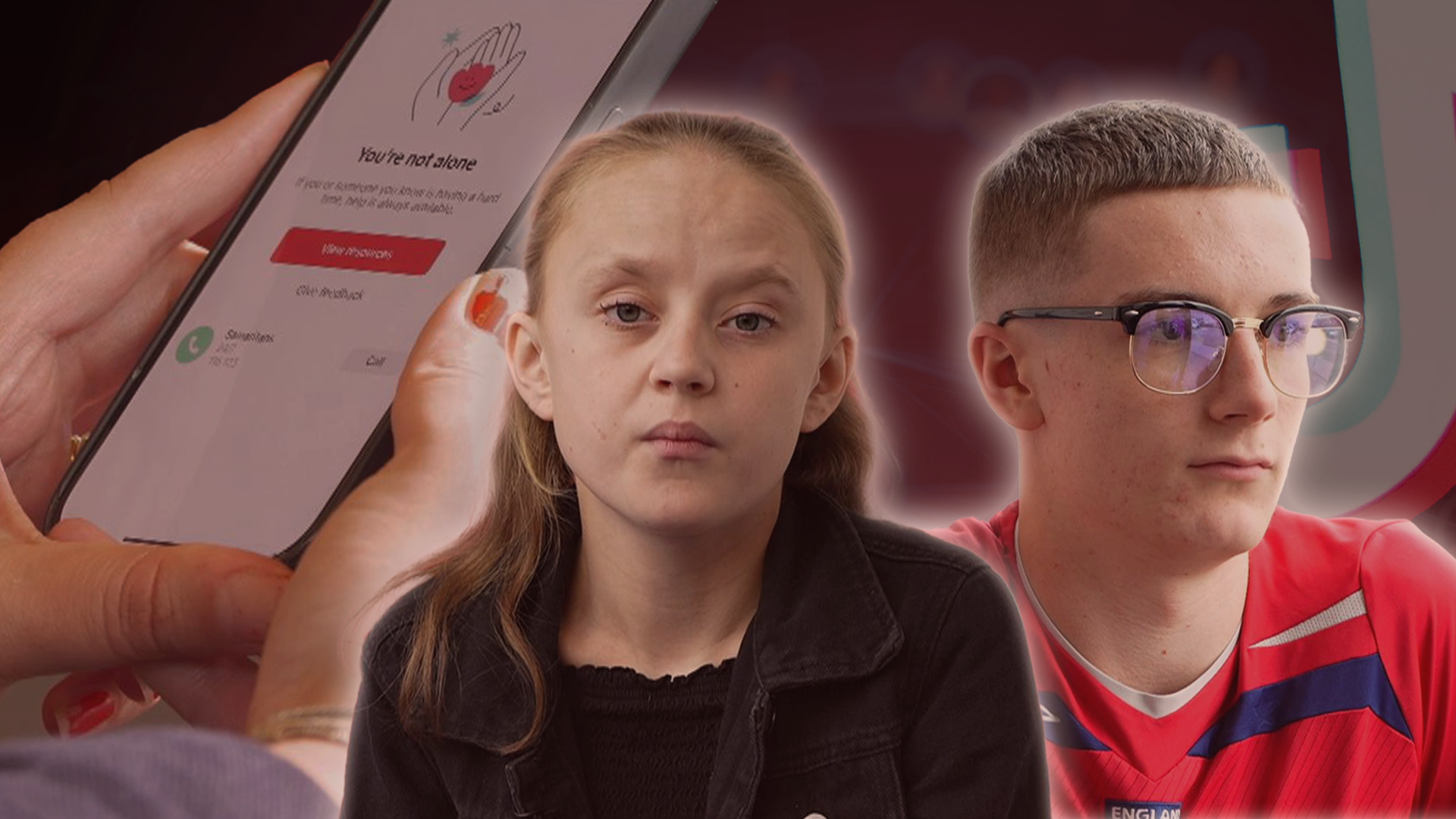
In the days before they were enforced, Sky News spoke to a group of teenagers at a youth club in Warrington, and their experiences online were stark.
They told us about frequently stumbling across violence, pornography and harmful mental health content in their social media feeds.
One 17-year-old described seeing more harmful and inappropriate content online “than I can count”. Even a 12-year-old described being shown language that “can be quite explicit for children my age”.
So, one month later, we spoke to some of the teenagers again. The difference in what they reported was remarkable.
Ryan, 17, told us previously that the internet was a “very, very malicious” place and described frequently seeing inappropriate content.
Just one month on, he says his algorithm now seems “tamed” – although he’d still describe the internet as malicious.
“[My] algorithms have been quite tame in comparison to what they were. I haven’t seen any sort of advertisements and stuff that can be alluding towards anything inappropriate,” he said.
Liam, 16, also said Instagram felt “tamed” compared to what it was like before.
He was previously being served a lot of eating disorder content but “in the time that the rules have been in place I don’t actually think I’ve seen any”.
“I used to see them every few scrolls so it’s very much gone down.”
Seventeen-year-old Indie said she now feels like she “can actually scroll on the internet worry-free of what’s going to pop up”. Abbey, 17, also said she feels less worried about scrolling now.
“I feel really good about [the new rules] because now I don’t have to worry about seeing things I don’t want to see,” she said.
Ryan, 15, previously told us he was frequently being shown violent content that would ruin his day. Now, “when I’m scrolling TikTok, I’m free from violence”, he said.
“It feels better, to be honest. I feel more clean, in a sort of way, because like, I’ve not seen it.”
Of the six teenagers we re-interviewed, only one – 15-year-old Oliver – said he hadn’t really noticed a change.
However, harmful content is still sometimes being shown to teens, we soon found out.
Self-harm content on TikTok
We decided to test the social media platforms ourselves, inspired by an experiment run by the Molly Rose Foundation (MRF) in the weeks running up to the rules being enforced.
At that time, MRF found their teen Instagram and TikTok accounts were bombarded with self-harm and suicide content.
More science and tech news:
New dinosaur discovered
TikTok puts UK jobs at risk
One month later, we created TikTok and Instagram accounts belonging to a 15-year-old and searched for terms relating to suicide and self-harm.
On Instagram, all three search terms took us to a mental health support page, signposting to helplines and advice.
On TikTok, however, that wasn’t the case.
One search term took us to a mental health support page, similar to Instagram’s.
Another search term showed the message “no results”.
Please use Chrome browser for a more accessible video player
But a third, relating to a specific type of self-harm, brought up numerous posts that should no longer be shown to young people under Ofcom’s guidance.
Some posts used euphemisms, others were more explicit about their content. None of it should be available to children in the UK now.
In response to our experiment, a TikTok spokesperson said:
“TikTok has designed 70+ features and settings that support the safety and well-being of teens and families on our app, and we partner with organisations such as Samaritans and the International Association for Suicide Prevention to bring well-being resources directly to our community.
“We continually enforce comprehensive Community Guidelines, with over 99% of violative content proactively removed by TikTok.
“This single account does not reflect the real experience of a teen on our platform.”
Please use Chrome browser for a more accessible video player
Pornography views plummet…
But a lot of the controversy about these rules hasn’t come from children. Adults use the internet too and the new age verification rules seem to have impacted the way they surf the web.
Not everyone’s happy about it.
Please use Chrome browser for a more accessible video player
In the days after the new rules came in, hundreds of thousands of people signed a petition to repeal the Online Safety Act, the legislation that underpins Ofcom’s regulations.
Despite the government responding to that petition to say it had “no plans” to repeal the act, the number of signatories has now passed half a million.
“We all want children to be safe online, but I don’t think those benefits outweigh the significant costs, not just to millions of low-abiding children and adults in the UK, but also the effect this is having elsewhere around the world,” said Matthew Feeney, advocacy manager at Big Brother Watch.
He brought up privacy concerns before the rules were introduced and says he’s still concerned, having seen them in action.
“It’s doing the UK no favours internationally,” he said. “No other liberal democracy has taken steps like this in this kind of way.
“There are ways to talk about child safety online without embracing this approach to the internet, which treats everyone as a child by default.”
In Westminster, the rules proved controversial too; when Reform leader Nigel Farage said his party would repeal the act if elected, Technology Secretary Peter Kyle responded on Sky News by saying Mr Farage was “on the side of predators”.
Please use Chrome browser for a more accessible video player
“Anybody who thinks this legislation is going to be perfect in this moment must think again,” said Baroness Beeban Kidron, founder of 5Rights and a longtime supporter of the new legislation.
“It should not be a conversation about attackers, detractors, defenders. What we have to do is go again, and again, and again until we get the balance right.”
One of the most obvious ways general internet use has changed since the rules came in is through pornography.
According to a recent report by the Children’s Commissioner, the world’s four largest pornography sites received nearly 11 billion visitors each month in 2020; more than the number of visitors to Amazon, LinkedIn, Netflix, Zoom and eBay combined.
But within a day of the new regulations, the number of UK visitors to pornography sites plummeted – and has stayed low.
Data given to Sky News by Similarweb showed that between 19 July and 15 August, there was a 45% drop in the number of UK users to Pornhub, the country’s most popular pornography site.
Across the top 100 sites, there was a 33% drop.
Even pornography-based forums took a hit – Subreddits linked to bondage, discipline, sadism, and masochism (BDSM), for example, are experiencing 12% fewer visits from the UK than before the rules were introduced.
But that doesn’t necessarily mean the UK has lost its appetite for adult content.
But VPN use seems to be up
At the same time as UK porn visits were plummeting, the use of virtual private networks (VPNs) was rocketing, as people bypassed new age verification pages altogether.
VPNs mask their users’ location and may mean that plenty of people were accessing porn… they just didn’t look like they were in the UK.
The number of people searching for VPNs on Google spiked dramatically in the days after the rules were introduced.
Although the interest has waned, it is still higher than pre-regulation levels.
Five out of Apple’s top 10 downloaded apps were VPNs just one day after the rules started being enforced.
One month later, two out of the top 10 apps in Apple’s App Store were still VPNs.
Baroness Beeban doesn’t believe it is children using VPNs to bypass age verification.
“I’ve actually found it extraordinary that the assumption is that all of the VPN surge is children. Think about it carefully.
“A lot of it will be adults who are actually trying to hide their own behaviour now that you actually have to be a bit more transparent.”