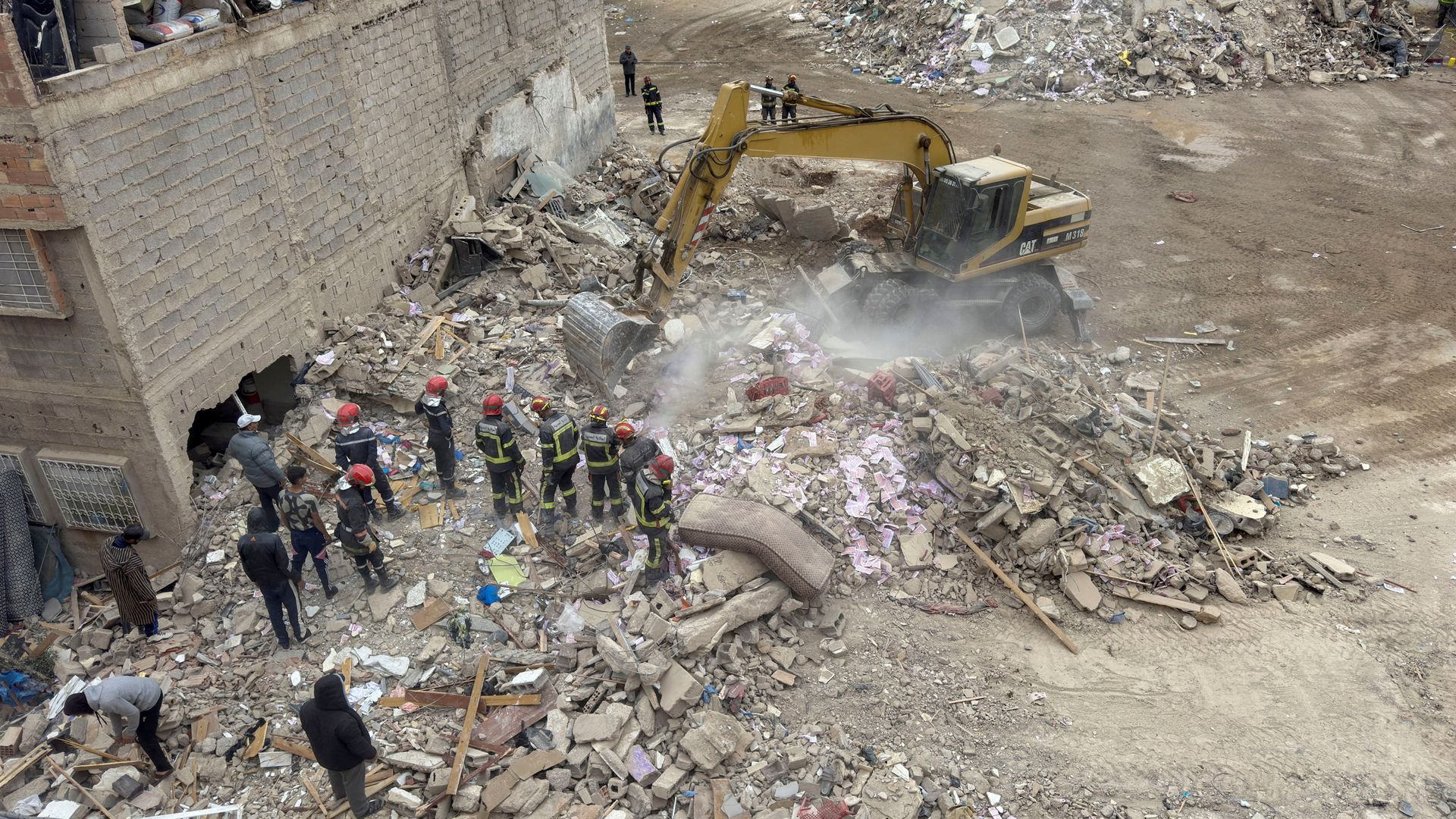
At least 22 people are dead and more than a dozen injured after a double building collapse in Morocco.
The disaster in Fez unfolded while one building was hosting an Aqiqah, a traditional Muslim celebration marking the birth of a child.
This building was home to eight families, the local authorities said, while the other was unoccupied.
A survivor, who lost his wife and three children in the overnight collapse, told a local TV station that rescuers had only been able to retrieve one body.
Another survivor, interviewed by SNRT News, Morocco’s national broadcaster, said: “My son who lives upstairs told me the building is coming down.”
She added: “When we went out, we saw the building collapsing.”
Witnesses said the buildings had shown signs of cracking for some time, when interviewed at the scene by SRNT.
Cameroon re-elects world’s oldest president
Why African campaign groups want the traditional world map scrapped
Teens unable to walk, mothers with rash-covered babies: How the drug kush is ruining lives
Both buildings, in the Al-Mustaqbal neighbourhood, were four-storeys high.
Announcing an investigation, the Fez prosecutor said 16 people had also been injured, citing preliminary figures.
Some 38,800 buildings across the country are classified as being at risk of collapse, according to Adib Ben Ibrahim, housing secretary of state.
The latest collapse is one of the worst in Morocco since a minaret fell in the historic northern city of Meknes, killing 41 people in 2010.
Fez, a former Moroccan capital, is the country’s third most-populous city, as well as one of its oldest, dating back to the eighth century.
But deteriorating living conditions, and poor public services, sparked a wave of anti-government protests there, and in other cities, two months ago.
Read more:
Hundreds injured as Morocco youth protests turn violent
Miliband shuns £25bn UK-Morocco renewable energy project
Keep up with all the latest news from the UK and around the world by following Sky News
The unrest, which was driven by younger Moroccans, revealed deep-seated anger over poverty and public services.
It comes at a time when the government is pushing ahead with ambitious infrastructure projects, including modern stadiums, ahead of the 2030 FIFA World Cup.
Fez, one of the host cities, has some of the country’s poorest neighbourhoods.