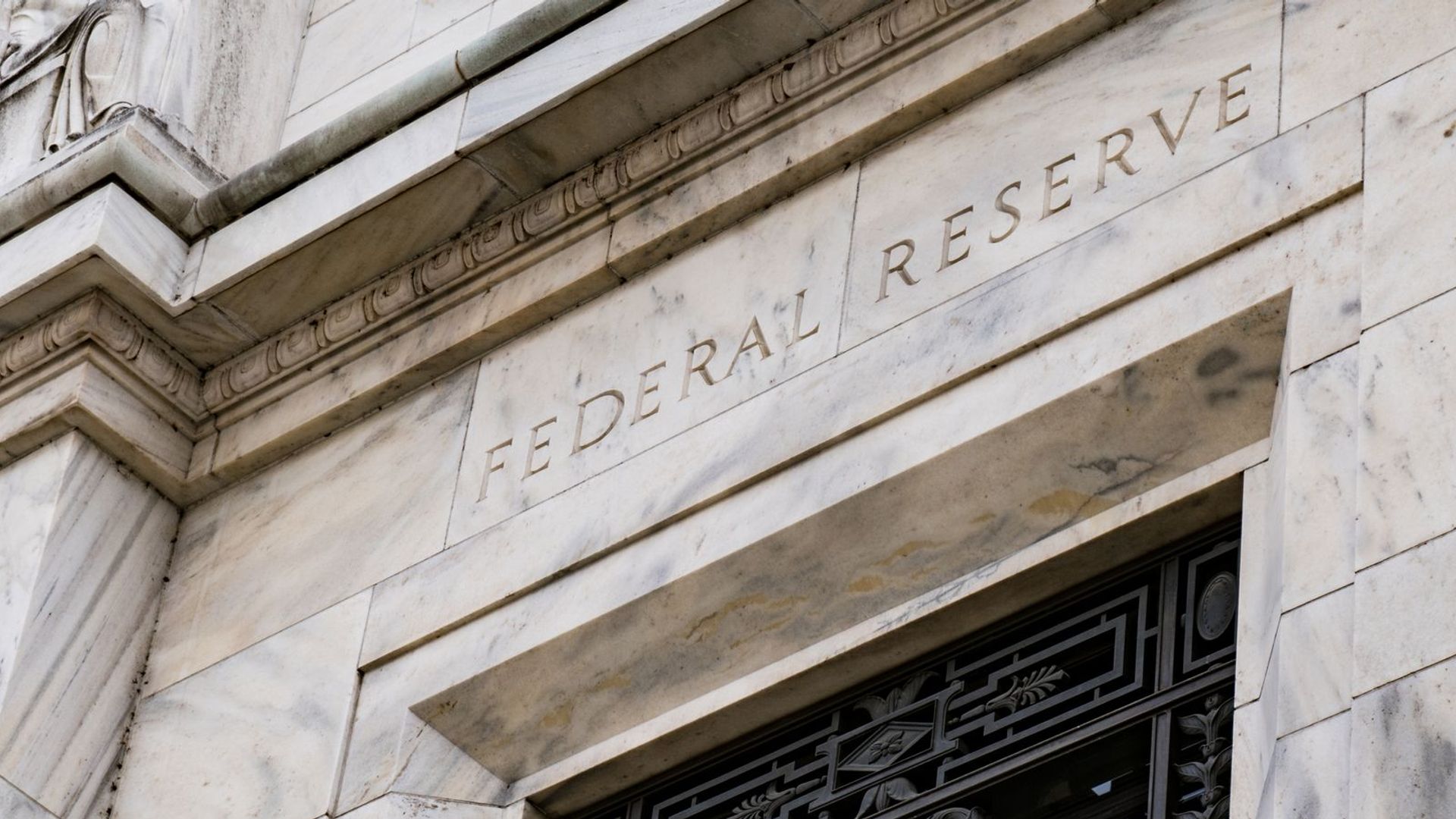
The US central bank has signalled a pause in interest rates cuts demanded by the president as it grapples pressures from both elevated inflation and a weak jobs market.
The Federal Reserve, which has a dual mandate to promote stable prices and maximum employment, guided that just one rate cut was currently likely in 2026 after it announced a third consecutive reduction in the cost of borrowing.
Its key rate was trimmed to a near three-year low to around 3.6%, though there were three dissenting votes which argued for no change to the Fed funds rate despite recent weakness in US hiring numbers.
Money latest: Big rise in pension drawdowns
The Fed’s caution over the outlook for rate cuts comes as US economic growth is projected to pick up, with the jobless rate easing sharply next year.
At the same time, its projections see a level of 2.4% for the pace of price growth by the end of next year, down from the current rate around 3%, as the effects of US trade tariffs are slowly removed from the inflation calculations.
The central bank has been worried about the impact on the world’s largest economy from Donald Trump’s trade war and said that its future decisions would be guided by the data.
Hundreds of jobs at risk as LEON moves to cut unprofitable restaurants
Revenues of water company to be cut by regulator Ofwat
Two popular chocolate bars no longer chocolate after Nestle changes recipe | Money blog
Please use Chrome browser for a more accessible video player
“I would note that having reduced our policy rate by 75 basis points since September and 175 basis points since last
September, the fed funds rate is now within a broad range of estimates of its neutral value and we are well positioned to
wait to see how the economy evolves,” Fed chair Jay Powell told reporters.
Financial market attention was already firmly on 2026 ahead of the Fed meeting as the central bank’s impartiality is placed at risk by the departure of Mr Powell in mid-May.
President Trump, who was yet to react to the Fed’s downbeat assessment for future rate cuts, has already taken action to place supporters of rapid interest rate reductions within the bank’s rate-setting ranks.
He is set to double down on that effort through his nomination for Mr Powell’s successor.
Mr Trump is seeking a monetary policy focus on promoting economic growth.
There is speculation an announcement on his pick could come before the end of the year.
If, as markets and commentators fear, that successor to Mr Powell is a champion for rate reductions, it renders the Fed’s current guidance as effectively worthless.
That may have played a part in the market reaction as the dollar and US bond yields, which reflect government borrowing costs, were little moved after the rate-setting committee’s decisions and findings were released.
Be the first to get Breaking News
Install the Sky News app for free
Danni Hewson, head of financial analysis at AJ Bell, said of the succession situation ahead of the rate decision: “This is understandably making bond markets skittish. There are checks and balances in the Federal Reserve system, but the appointment of a dovish chair and rising political influence on the US central bank will call into question its independence, and its grip on monetary policy.
“That could push shorter dated US bond yields down, and longer dated Treasury yields up, as markets factor in both the sugar rush of interest rate cuts and the hangover of inflation.
“Along with fears about the US budget deficit, that goes a long way to explaining why 20-year US Treasury yields are nudging up towards 5% even in the middle of a rate cutting cycle.”