The market reaction to today’s interest rate cut from the Bank of England has been very interesting indeed.
Sterling, as one might have expected, fell against both the dollar and the euro – although some market participants raised an eyebrow that the bulk of the decline against the greenback, in particular, came before news emerged that the monetary policy committee (MPC) had cut Bank rate.
More striking still, though, were the falls in the yields on gilts – UK government bonds – which also act as implied government borrowing costs.
Money latest: Reaction as the Bank of England cuts borrowing costs
The yield on 10-year gilts, which had been as high as 4.293% at the beginning of July, fell to 3.906% – a level not seen since 12 March.
The yield on 5-year gilts, as high as 4.121% a month ago, fell to 3.674% – a level last seen on 1 February.
It has now declined by nearly 6% just this week – which is a big fall as these things go.
Winter fuel payment changes – are you still eligible?
Rachel Reeves accuses Jeremy Hunt of lying about ‘true state’ of UK’s finances
NatWest ‘Tell Sid’ retail share sale plans scrapped by chancellor
And the yield on 2-year gilts, which tend to be the most sensitive to short-term interest rates, which were 4.262% as recently as the start of July, fell to 3.717% – a level last seen on 17 May last year.
These moves, in theory, ought to be very good news for Rachel Reeves, the new Chancellor of the Exchequer.
Please use Chrome browser for a more accessible video player
Interest payments on the national debt were forecast by the Treasury (at outgoing chancellor Jeremy Hunt’s spring budget) to come in at £109bn this financial year – making it the fourth-highest element of government spending this year after social security, the NHS and education.
So anything that brings down government borrowing should, all other things being equal, free up more money for other things – higher public spending, tax cuts or, more straightforwardly in the current climate, lower government borrowing.
This was already happening, to an extent, as 28% of the interest payable on the national debt is fixed to the old RPI measure of inflation. But lower gilt yields in the round would also make Ms Reeves’s job significantly easier.
Except that it also poses a political headache for the new chancellor.
Please use Chrome browser for a more accessible video player
In her Commons statement on Monday, Ms Reeves sought to pin spending cuts on roads and the railways, as well as decisions to drop the proposed cap on social care costs and to strip 10 million pensioners of the winter fuel allowance, to a £22bn fiscal hole she claims she inherited from Mr Hunt.
That was not strictly true: some £9.4bn of that shortfall was created by her own decision, also announced that afternoon, to hand inflation-busting pay rises to millions of public sector workers.
Yet the speech gave a preview of how Ms Reeves will present her forthcoming October budget which, as she confirmed on Tuesday, is likely to include further tax increases.
It is clear the chancellor proposes to frame those tax increases as an unpleasant decision forced on her by the state of the public finances. Something she would rather not be doing were circumstances better.
However, if government borrowing costs continue to fall – and the market is already pricing at least one further rate cut from the Bank of England this year – it becomes harder for Ms Reeves to make that argument, since she will be shelling out less money on interest payments.
It would imply that some of the more contentious measures for which the public is being softened up, such as hikes in inheritance tax and a raid on the tax relief enjoyed by people saving for their pension, are less things Ms Reeves is doing because they have been forced on her – but because she has deliberately chosen to do them.
Please use Chrome browser for a more accessible video player
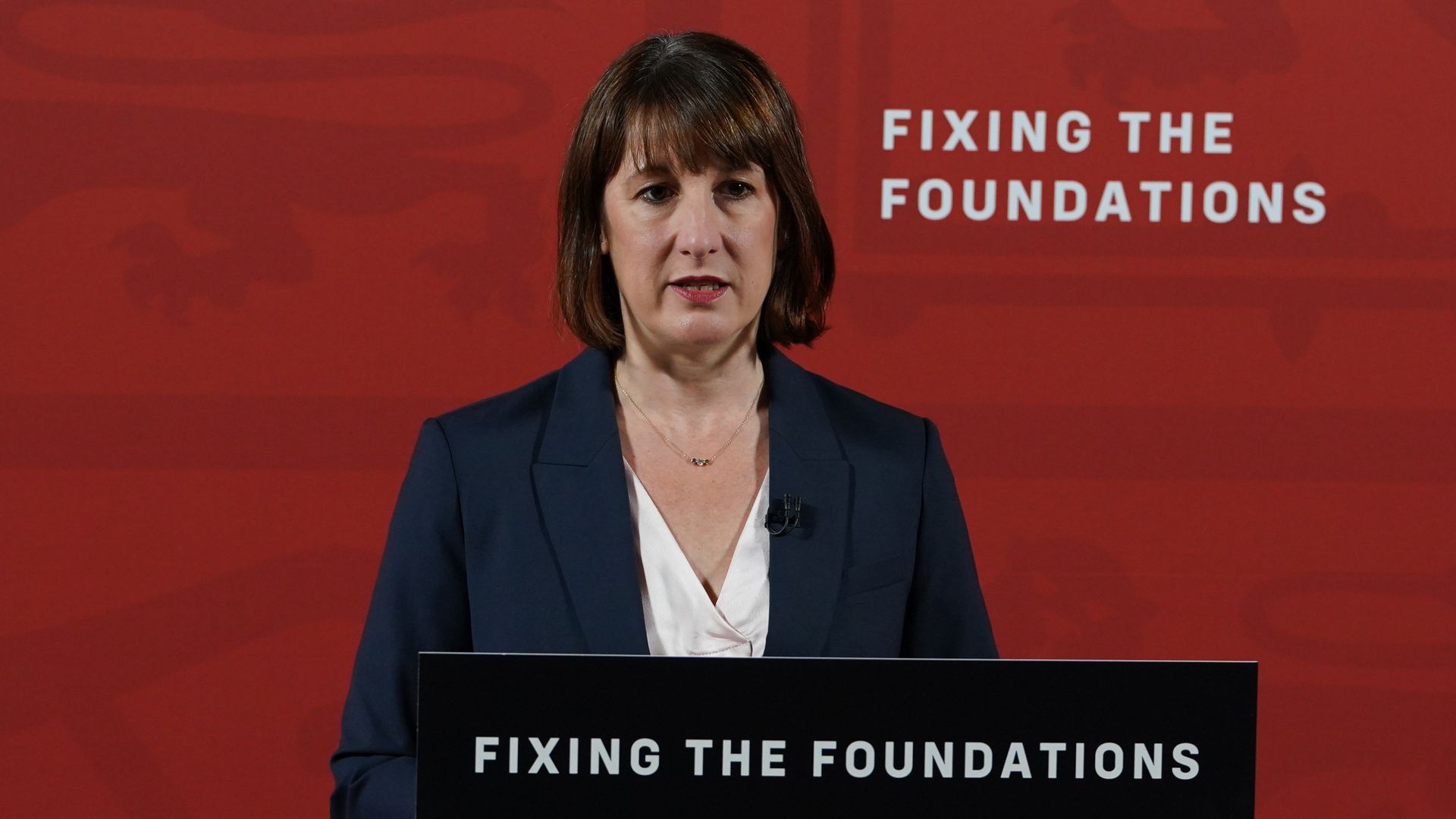
This may explain why, in reaction to the Bank of England’s move this lunchtime, Ms Reeves gave a somewhat guarded reaction.
She said: “I’m focused on taking the difficult decisions to fix the foundations of our economy.”
The chancellor also pushed back at suggestions that the pay rises she awarded on Monday will stoke inflation.
She added: “It’s up to the Bank of England to make their decisions around interest rates and to forecast inflation. I made the decision on Monday to… give a pay rise to our armed forces, our police, teachers, doctors and nurses – I think that is the right thing to do.
“But we also found efficiencies in government spending to offset some of that pay increase.”
Read more from Sky News:
Interest rates cut for first time in more than four years
What the interest rate cut means for you
Be the first to get Breaking News
Install the Sky News app for free
Andrew Bailey, the Bank of England governor, also found himself having to answer similar questions when he and his colleagues faced the press to explain today’s decision.
Asked whether the pay increases awarded by Ms Reeves this week would be inflationary, the governor said: “First of all, we would take the lead in terms of pay indicators from the private sector, because private sector pay is feeding directly into consumer price inflation.
“But public sector pay obviously has an effect on demand and it can have a signalling effect. On the whole, I think private sector pay tends to lead public sector pay and that’s what we’ve been seeing in recent times.
“A second point I’ll make is… if you do a very simple ‘back of the envelope’ on the increment to public sector pay that the chancellor announced… the proverbial back of the envelope suggests an increment in inflation… which is very small – you’re in quite small second decimal place numbers.”
That suggests Mr Bailey is fairly confident the pay rises will not stoke inflation in months to come.
But there is little doubt it could, potentially, make the MPC’s decision harder.
In the meantime, expect Ms Reeves to refute, at every turn, the notion that falling government borrowing costs will take away the need for tax increases.