• Coins MarketCap
    • Coins MarketCap
    • Crypto Calculator
    • Top Gainers and Loser of the day
  • Crypto Exchanges
  • Bitcoin News
  • Crypto News
    • Cryptocurrency
    • Blockchain
    • Finance
    • Investing
    • View all latest Updates regarding crypto
Tuesday, November 11, 2025
WIREOPEDIA
No Result
View All Result
Contribute!
CONTACT US
  • Home
  • Breaking News
  • World
  • UK
  • US
  • Entertainment
  • Business
  • Technology
  • Defense
  • Health Care
  • Politics
  • Strange
  • Crypto News
WIREOPEDIA
  • Home
  • Breaking News
  • World
  • UK
  • US
  • Entertainment
  • Business
  • Technology
  • Defense
  • Health Care
  • Politics
  • Strange
  • Crypto News
No Result
View All Result
WIREOPEDIA
No Result
View All Result
Home Breaking News

Orionid meteor shower to light up skies – but moon may stop you seeing it

by wireopedia memeber
October 21, 2024
in Breaking News, UK News, World
0
Orionid meteor shower to light up skies – but moon may stop you seeing it
74
SHARES
1.2k
VIEWS
Share on FacebookShare on Twitter

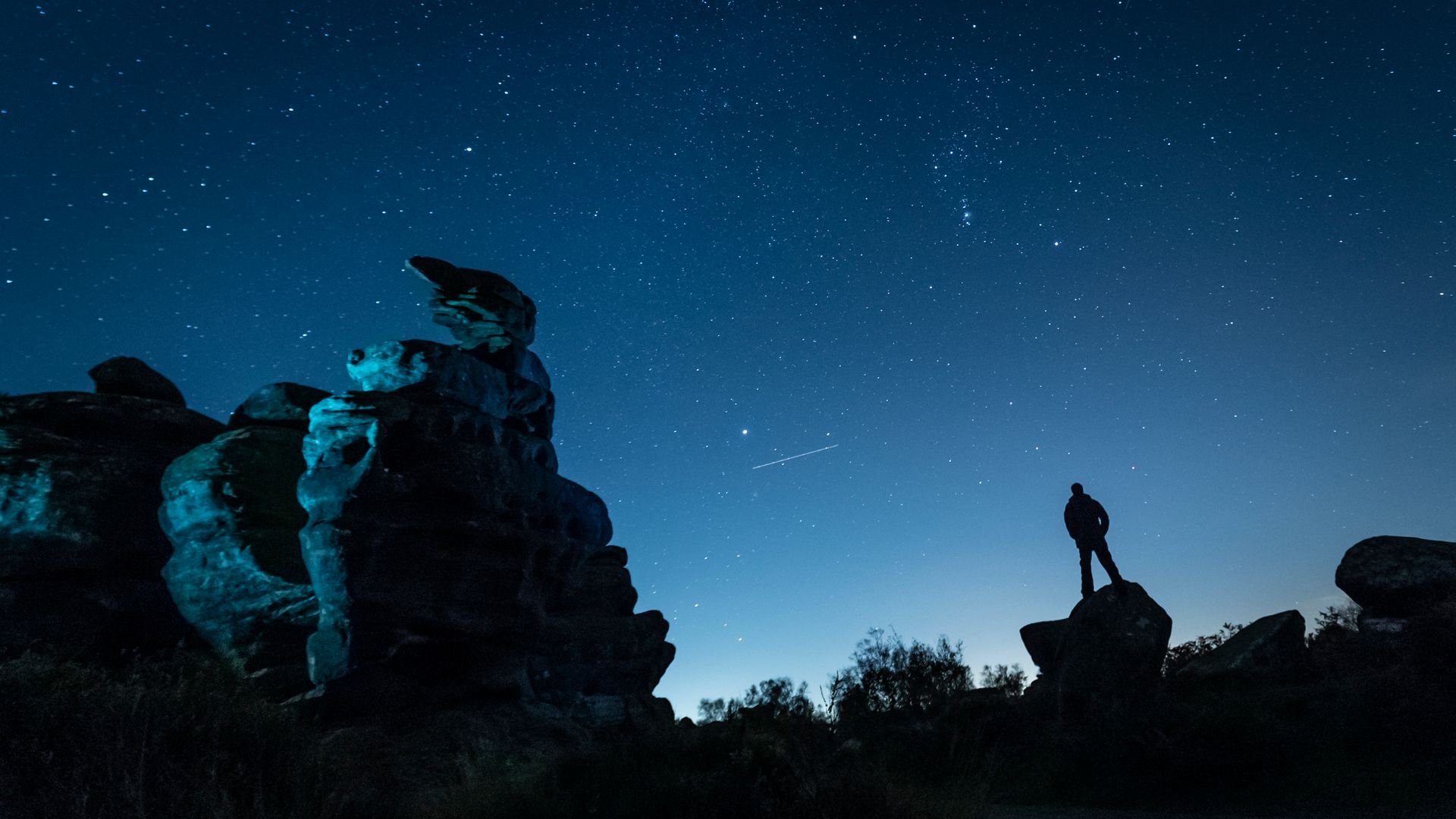
An incredible display of celestial fireworks may be visible overnight as debris left by Halley’s Comet streaks across the night sky – but the moon may end up ruining the view.

You might also like

Senate passes shutdown-ending deal

UK’s Prevent counter-terrorism strategy ‘no longer keeping the country safe’

John Thune secures provision in government funding bill letting senators sue for phone records seizure

The Orionid meteor shower, which has been going on all month, peaks for several hours from midnight tonight, offering you the best possible chance, in theory, of seeing the spectacle for yourself.

What could I see?

The annual shower presents a dramatic light show, producing up to 25 meteors every hour until the early morning.

You’ll have seen some dazzling shots from observers in the past.

What is it?

The Orionid Meteor Shower that we’ll (hopefully) be seeing is a result of the Earth passing through debris of Halley’s Comet.

Each time that Halley returns to the inner solar system, its nucleus sheds ice and rocky dust into space. The dust grains eventually become the Orionids in October.

This happens because Halley’s Comet intersects Earth’s path twice every year due to the respective elliptical orbits around the sun.

It leaves behind the ice and rocky dust which, when they enter Earth’s atmosphere, become the Orionids, as well as the Eta Aquariid meteor show in May.

The phenomenon gets its name from the Orion constellation – which is one of the brightest groups of stars in the sky.

The meteoroids can travel at high speeds of 148,000mph through the Earth’s atmosphere and appear as vast streaks of light.

With the comet only swinging close enough to Earth to see it once every 75 to 76 years, this annual shower provides some compensation for those who may miss that rare event.

How can I see it?

The good news is that you can leave your high-powered telescope at home, because the meteor shower is visible to the naked eye in all parts of the sky.

All you need, according to experts, is a bit of patience, a clear sky and a safe spot away from street lights and other light pollution.

Read more:
‘Far side’ of the moon samples make it back to earth
When will we know if there’s life beneath Jupiter moon’s icy crust?

Experts advise that you get yourself in a position to spot the shower around 30 minutes before you hope to see it, giving your eyes plenty of time to adjust to the darkness before the best viewing time between midnight and dawn.

When observing, NASA suggests lying flat on your back with your feet facing southeast if you are in the Northern Hemisphere or northeast if you are in the Southern Hemisphere, and taking in as much of the sky as possible.

Why is it likely to be difficult this year?

Clouds are often the biggest concern for stargazers hoping to catch the spectacle – but this year your view is likely to be hindered by the amount of natural light from the moon.

That’s because the moon is in the midst of what’s known as a waning gibbous, according to the Royal Greenwich Observatory, which is the reducing phase between a full moon and a half moon.

The observatory says this means conditions are not particularly favourable this year – but the moon will continue to reduce its light between now and 7 November, so even if you don’t see it tonight there may still be a chance later on.


Read Entire Article
Tags: Breaking NewsSkynewsUK
Share30Tweet19

Leave a Reply Cancel reply

Your email address will not be published. Required fields are marked *

Related News

Shiba Inu Turns 4: Here’s How Much SHIB Was Burned In July 2024

August 2, 2024
Where is Kemi Badenoch’s megaphone?

Where is Kemi Badenoch’s megaphone?

November 29, 2024
Cathie Wood’s ARK, Softbank Eye Tether Stakes In Massive Fundraising

Cathie Wood’s ARK, Softbank Eye Tether Stakes In Massive Fundraising

September 27, 2025

Browse by Category

  • Blockchain
  • Breaking News
  • Business
  • Crypto
  • Crypto Market
  • Cryptocurrency
  • Defense
  • Entertainment
  • Finance
  • Health Care
  • Investing
  • Market
  • Politics
  • Strange
  • Technology
  • UK News
  • US News
  • World
WIREOPEDIA

Wireopedia is an automated news feed. The Wireopedia AI pulls from sources with different views so you can see the various sides of different arguments and make a decision for yourself. Wireopedia will be firmly committed to the public interest and democratic values.

Privacy Policy     Terms and Conditions

CATEGORIES

  • Blockchain
  • Breaking News
  • Business
  • Crypto
  • Crypto Market
  • Cryptocurrency
  • Defense
  • Entertainment
  • Finance
  • Health Care
  • Investing
  • Market
  • Politics
  • Strange
  • Technology
  • UK News
  • US News
  • World

BROWSE BY TAG

Bitcoin Bitcoinist Bitcoinmagazine Blockchain Breaking News Business BuzzFeed Celebrity News Coin Surges Cointelegraph Cryptocurrencies Cryptoslate Defense Entertainment Health Care insidebitcoins Market Stories newsbtc Politico Skynews Strange Technology Trading UK US World

RECENT POSTS

  • Senate passes shutdown-ending deal
  • Ethereum Approaches Critical Resistance — Bullish Breakout Or Trap In The Making?
  • Would You Live On A Private Island, Vineyard, Mansion, Or Lake, Depending On The K-Pop Artists You Choose?
  • Only True Fans Of The Smiths Can Pass This Challenging Trivia Quiz
  • Bitcoin Price Confronts Major Technical Wall Around $107K, Momentum Starts to Slow

© 2024 WIREOPEDIA - All right reserved.

No Result
View All Result
  • Home
  • Breaking News
  • World
  • UK
  • US
  • Entertainment
  • Business
  • Technology
  • Defense
  • Health Care
  • Politics
  • Strange
  • Crypto News
  • Contribute!

© 2024 WIREOPEDIA - All right reserved.

  • bitcoinBitcoin(BTC)$105,999.004.14%
  • ethereumEthereum(ETH)$3,639.067.61%
  • tetherTether(USDT)$1.000.07%
  • rippleXRP(XRP)$2.405.83%
  • binancecoinBNB(BNB)$1,011.342.21%
  • solanaSolana(SOL)$166.856.15%
  • usd-coinUSDC(USDC)$1.000.00%
  • staked-etherLido Staked Ether(STETH)$3,638.857.47%
  • tronTRON(TRX)$0.2913780.18%
  • dogecoinDogecoin(DOGE)$0.1816374.08%
  • cardanoCardano(ADA)$0.594.02%
  • wrapped-bitcoinWrapped Bitcoin(WBTC)$106,064.004.35%
  • chainlinkChainlink(LINK)$16.155.37%
  • bitcoin-cashBitcoin Cash(BCH)$507.092.56%
  • stellarStellar(XLM)$0.2899853.53%
  • litecoinLitecoin(LTC)$109.833.78%
  • avalanche-2Avalanche(AVAX)$17.963.91%
  • shiba-inuShiba Inu(SHIB)$0.0000102.60%
  • polkadotPolkadot(DOT)$3.23-1.36%
  • crypto-com-chainCronos(CRO)$0.1307324.58%
  • daiDai(DAI)$1.000.10%
  • uniswapUniswap(UNI)$6.6912.71%
  • nearNEAR Protocol(NEAR)$2.92-4.20%
  • okbOKB(OKB)$127.364.44%
  • filecoinFilecoin(FIL)$2.68-7.53%
  • algorandAlgorand(ALGO)$0.1800392.61%
  • vechainVeChain(VET)$0.0173112.02%
  • cosmosCosmos Hub(ATOM)$2.991.62%
  • elrond-erd-2MultiversX(EGLD)$10.11-4.33%