• Coins MarketCap
    • Coins MarketCap
    • Crypto Calculator
    • Top Gainers and Loser of the day
  • Crypto Exchanges
  • Bitcoin News
  • Crypto News
    • Cryptocurrency
    • Blockchain
    • Finance
    • Investing
    • View all latest Updates regarding crypto
Tuesday, October 7, 2025
WIREOPEDIA
No Result
View All Result
Contribute!
CONTACT US
  • Home
  • Breaking News
  • World
  • UK
  • US
  • Entertainment
  • Business
  • Technology
  • Defense
  • Health Care
  • Politics
  • Strange
  • Crypto News
WIREOPEDIA
  • Home
  • Breaking News
  • World
  • UK
  • US
  • Entertainment
  • Business
  • Technology
  • Defense
  • Health Care
  • Politics
  • Strange
  • Crypto News
No Result
View All Result
WIREOPEDIA
No Result
View All Result
Home Breaking News

Perseid meteor shower: When and how to see up to 100 fireballs shoot across the sky per hour

by wireopedia memeber
August 11, 2025
in Breaking News, UK News, World
0
Perseid meteor shower: When and how to see up to 100 fireballs shoot across the sky per hour
74
SHARES
1.2k
VIEWS
Share on FacebookShare on Twitter

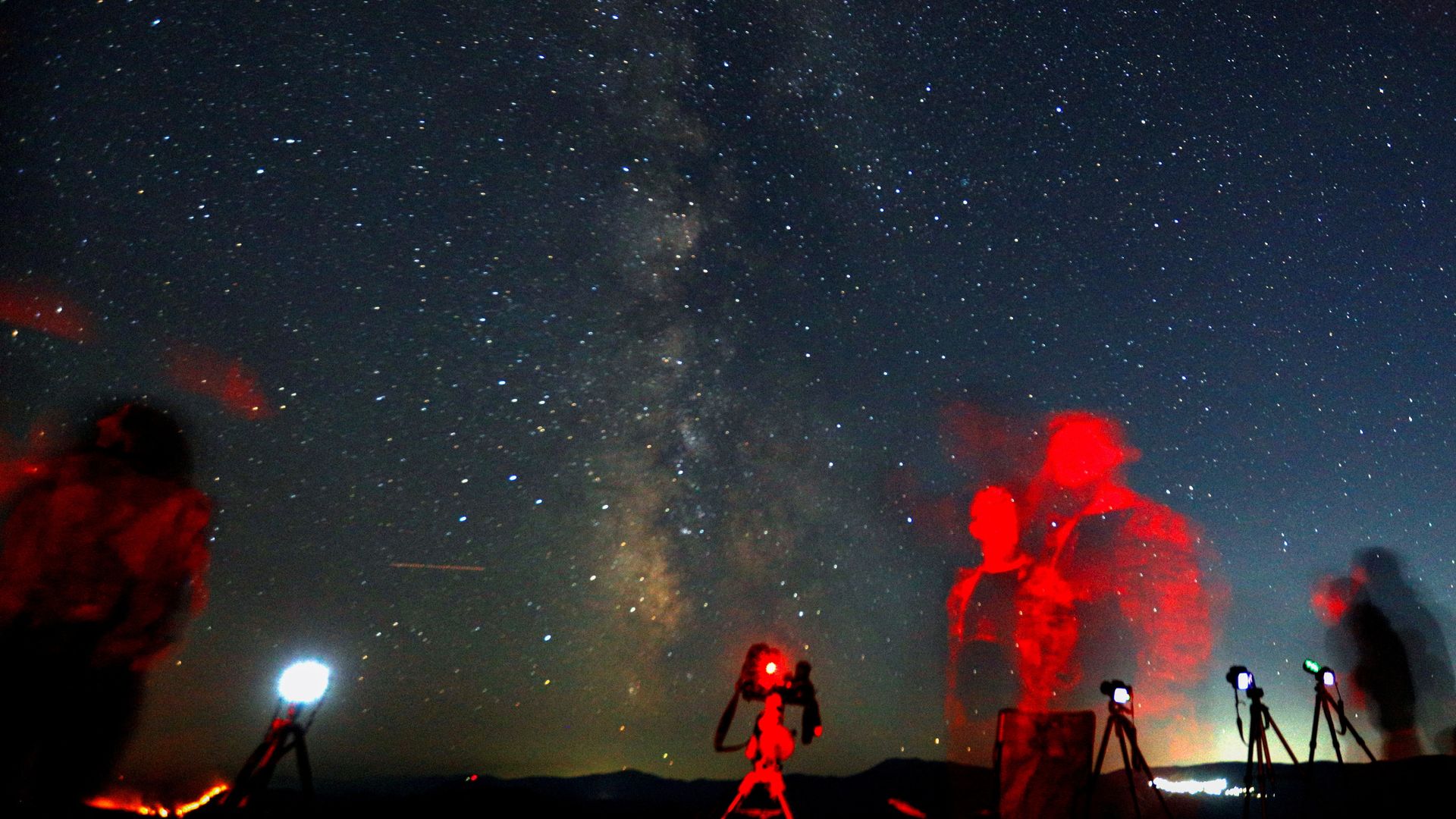
The best day to see the “most popular meteor shower of the year” is just round the corner.

You might also like

Flag-waving pro-Palestinian protesters reject PM’s claims that they are being ‘un-British’

Robert Jenrick urged to apologise for ‘disgraceful’ integration comments

Lord Heseltine attacks Badenoch’s new policies – and calls Farage a ‘phoney’

The Perseids shower can bring up to 100 meteors per hour at its peak – including bright streaks and fireballs – creating a spectacular site for stargazers.

Here is everything you need to know, from increasing your chances of seeing meteors to why it happens in the first place.

Why does the Perseids meteor shower happen?

The phenomenon has been recurring for centuries and is the result of Earth passing through a cloud of dust left behind the Comet Swift-Tuttle.

The meteors, which are typically no bigger than a grain of sand, burn up as they hit the Earth’s atmosphere at 36 miles per second, producing bright trails of light.

Perseids – named after Perseus, the constellation that the meteors are believed to originate from – are also known for their fireballs.

This is characterised by larger explosions of light and colour which stay in the sky for longer than the average meteor streak.

It has been described by NASA as the “most popular meteor shower of the year”.

When is the best day to see it?

The meteor shower has been active from 17 July and will go on until 24 August, according to the Royal Observatory.

However, the number of meteors is expected to increase every night until it reaches its peak on 12 August.

On this day, observers in the UK should be able to see some meteors as soon as the Sun sets, but the Royal Observatory says the best time to look up is between midnight on 11 August and 5.30am.

A bonus for people trying to catch the meteor shower, Jupiter and Venus will also appear at their closest on the 11 and 12 August.

NASA says on the morning of the 12th, the two planets will be roughly a degree apart and will shine brightest before sunrise.

Why the moon matters

The peak of this year’s Perseids shower may be hindered by the moon being at 84% brightness.

NASA says the glare of the moon is expected to wash out the brightest meteors, but all is not lost.

Keen stargazers may still be able to see the action by standing behind a tall building or tree to block out some of the moonlight.

Tips for stargazers

Unsurprisingly, experts say observers should still try to avoid well-lit and built-up areas and try to find unobstructed views to make the most of the spectacle.

Meteorite expert Dr Ashley King, from London’s Natural History Museum, said standing on a hill in the middle of the countryside or going to the coast are typically ideal meteor viewing locations.

He adds that the skies may look blank for the first 10 minutes while your eyes adjust to the dark, so warned stargazers to be patient.

Follow our channel and never miss an update

Using a red light torch can also help, as it will not strain your eyes while they get used to the dark.

He said: “Once you get used to the low light levels, you’ll begin to notice more and more. So don’t give up too quickly.”


Read Entire Article
Tags: Breaking NewsSkynewsUK
Share30Tweet19

Leave a Reply Cancel reply

Your email address will not be published. Required fields are marked *

Related News

Flockerz ICO Hits $9.5M Mark With Just 9 Days Left – FLOCK Primed for Post-Listing Rally?

Flockerz ICO Hits $9.5M Mark With Just 9 Days Left – FLOCK Primed for Post-Listing Rally?

January 12, 2025

Will Johnson’s stopgap funding plan make it to the floor?

September 11, 2024

Base, Arbitrum, And Ethereum L2s Will Have To Buy Decentralization, Here’s Why

October 24, 2024

Browse by Category

  • Blockchain
  • Breaking News
  • Business
  • Crypto
  • Crypto Market
  • Cryptocurrency
  • Defense
  • Entertainment
  • Finance
  • Health Care
  • Investing
  • Market
  • Politics
  • Strange
  • Technology
  • UK News
  • US News
  • World
WIREOPEDIA

Wireopedia is an automated news feed. The Wireopedia AI pulls from sources with different views so you can see the various sides of different arguments and make a decision for yourself. Wireopedia will be firmly committed to the public interest and democratic values.

Privacy Policy     Terms and Conditions

CATEGORIES

  • Blockchain
  • Breaking News
  • Business
  • Crypto
  • Crypto Market
  • Cryptocurrency
  • Defense
  • Entertainment
  • Finance
  • Health Care
  • Investing
  • Market
  • Politics
  • Strange
  • Technology
  • UK News
  • US News
  • World

BROWSE BY TAG

Bitcoin Bitcoinist Bitcoinmagazine Blockchain Breaking News Business BuzzFeed Celebrity News Coin Surges Cointelegraph Cryptocurrencies Cryptoslate Defense Entertainment Health Care insidebitcoins Market Stories newsbtc Politico Skynews Strange Technology Trading UK US World

RECENT POSTS

  • Starmer refuses to rule out tax rises as he flies business leaders to India
  • This Major Bitcoin Metric Just Made A New Low For The First Time In 6 Years, Is An ATH Above $130,000 Coming?
  • BOE signals flexibility on stablecoin caps amid industry pushback: Report
  • Crypto Leverage Trading in Focus: How Leverage.Trading Data Tracks Retail Stress From Liquidations to Early Warnings
  • Bitfinex Analysts Say Bitcoin’s Q4 Tailwinds Are ‘Structurally Strong’

© 2024 WIREOPEDIA - All right reserved.

No Result
View All Result
  • Home
  • Breaking News
  • World
  • UK
  • US
  • Entertainment
  • Business
  • Technology
  • Defense
  • Health Care
  • Politics
  • Strange
  • Crypto News
  • Contribute!

© 2024 WIREOPEDIA - All right reserved.

  • bitcoinBitcoin(BTC)$121,988.00-2.53%
  • ethereumEthereum(ETH)$4,493.30-4.39%
  • binancecoinBNB(BNB)$1,315.527.45%
  • tetherTether(USDT)$1.000.02%
  • rippleXRP(XRP)$2.87-4.58%
  • solanaSolana(SOL)$222.89-4.85%
  • usd-coinUSDC(USDC)$1.000.00%
  • staked-etherLido Staked Ether(STETH)$4,490.40-4.37%
  • dogecoinDogecoin(DOGE)$0.249688-7.29%
  • tronTRON(TRX)$0.338515-2.27%
  • cardanoCardano(ADA)$0.83-6.01%
  • wrapped-bitcoinWrapped Bitcoin(WBTC)$122,133.00-2.40%
  • chainlinkChainlink(LINK)$22.02-6.06%
  • stellarStellar(XLM)$0.385983-5.58%
  • avalanche-2Avalanche(AVAX)$28.26-7.97%
  • bitcoin-cashBitcoin Cash(BCH)$578.10-4.35%
  • litecoinLitecoin(LTC)$117.23-1.46%
  • shiba-inuShiba Inu(SHIB)$0.000012-5.36%
  • crypto-com-chainCronos(CRO)$0.196235-7.03%
  • polkadotPolkadot(DOT)$4.16-5.15%
  • uniswapUniswap(UNI)$7.80-7.26%
  • okbOKB(OKB)$217.45-3.69%
  • daiDai(DAI)$1.000.02%
  • nearNEAR Protocol(NEAR)$2.95-3.77%
  • vechainVeChain(VET)$0.022594-5.02%
  • algorandAlgorand(ALGO)$0.220565-4.15%
  • cosmosCosmos Hub(ATOM)$4.07-5.08%
  • filecoinFilecoin(FIL)$2.29-5.02%
  • elrond-erd-2MultiversX(EGLD)$13.39-4.99%
  • axie-infinityAxie Infinity(AXS)$2.15-7.57%